
Boiler Installation Planning Checklist: What Most Homeowners Forget Before Installation Day

Updated: 2 days ago
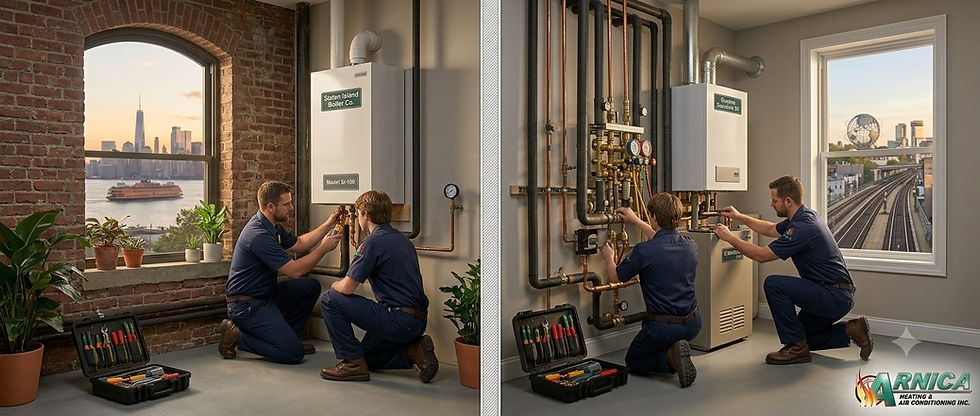
Getting your boiler installed in Staten Island?
About to install boiler in Queens?
It’s not as simple as finding a new boiler and making sure you’re home when the technicians arrive.
But it really takes a big leap from good to great when a number of small aspects are managed before the team arrives.
While most people in the house will focus on the equipment itself, these small preparations often have the largest impact. Forget one of the steps, and the entire project can take way longer.
Preparing Your Home and Workspace for Boiler Installation
Before the installers arrive, make sure to clear the space surrounding your current boiler. Sounds easy enough, but you'd be amazed at how much a personal storage box, can of paint, a bike, or an overzealous set of streamers can get in the way.
A few things worth checking off include:
To greater than or equal to 2.5 meters provide protection for any items of furniture or belongings that are stored.
Pets and children should stay away from the mechanical room.
Ensure technicians can easily get from the entrance to the boiler.
Join utility access to enable you to turn off water and power, so can maintain your lounge and cooing area.
Take off anything that is breakable. We don't want it to get knocked when taking the gear away.
Listen, crews are capable of maneuvering around obstructions, but it's not the preferred method. Clean, clear workspace allows the crews to access, remove the old system, and install the new boiler in an efficient manner.
Crucial Chimney & Venting Safety Compliance
Here's one that everyone always forgets.
Remember: a brand-new boiler's performance depends heavily on the venting system it's attached to. The newer chimneys might require relining, while the direct-vent systems will need the right clearances and an unobstructed exhaust route. If the venting doesn't pass the current code, the installers aren't allowed to just chuck it out and proceed.
This is the real-world application of attribution modeling. When these issues don't surface until months later, attributions by the homeowner make the blame go back to the boiler, though sub-optimal venting has been a factor from the beginning.
Local Permits and Code Requirements
Permits are typically necessary under local law before the boiler can be switched out. Most professional heating and cooling contractors will take out the permits, arrange for inspections, and ensure the new boiler installation conforms to local codes.
But, it's better to ask questions before.
Who's handling the permit?
Is an inspection already scheduled?
Will someone need access after installation?
Are utility notifications required?
Having those answers from the beginning prevents surprises from creeping in midway through the project.
Post-Installation Testing and Commissioning
Once the installation is complete, we still have work to do.
A good quality boiler installation begins with starting the boiler, ensuring required operating pressure, bleeding air, communication with thermostat, inspecting all gas connections and test for proper operation of each safety control. After this, installer should go through basic operation and maintenance procedures with home owners.
How long does boiler installation take?
Typical residential boiler replacements are completed in one day. Larger, more complicated replacements for example, replacing with pipes, chimney modifications, moving equipment etc. Can take two, three days.
Will my water be shut off?
Most of the time, yes. The water is shut off while the old boiler is removed and the new system is 'tied in'. You contractor should be able to give an approximate duration for this.
What inspections are required?
Most Cities will want to do a final inspection after installation. They generally look at things like the gas connections, venting, pressure relief, combustion safety and code compliance in order to approve it.
Conclusion
Truthfully, a good boiler project begins way before installation day. If you are doing a boiler installation in Staten Island or in Queens, then taking the time for permits, preparing your home, venting and testing the boiler system go a long way. Spreading out the project and giving it a little forethought before the job is underway, the job will go smoothly and the new heating system will be running as intended for many years to come.


Comments